



On 27 June 2025, the Hong Kong government unveiled two transformative consultation papers proposing comprehensive licensing regimes for virtual asset (VA) dealers and custodians, marking the next phase in the city’s evolution toward becoming a globally competitive yet responsibly regulated digital asset hub. These proposals signal Hong Kong’s commitment to the principle of “same activity, same risks, same regulation”, ensuring that VA businesses face the same rigorous oversight as their traditional financial counterparts.
Hong Kong’s virtual asset regulation: Licensing for dealing and custody
Sam Wu, Beverly Fu • 2 January 2026
Hong Kong’s virtual asset regulation: Licensing for dealing and custody

The strategic rationale
To appreciate why Hong Kong is tightening its VA regulatory framework, it is essential to understand the broader context. VAs operate in a unique space where traditional financial safeguards can appear ambiguous. Previous regulatory initiatives, including the 2022 policy statement on VA development and the 2023 licensing regime for VA trading platforms, laid the groundwork, but gaps remained. The new proposals fill those gaps by addressing two critical functions: the buying and selling of VAs and the safekeeping of the VAs once purchased.
For people entering the VA space, this regulatory tightening offers reassurance. It means that when they deposit cryptocurrency with a licensed custodian or trade tokens through a regulated dealer, there are now measurable standards, capital requirements and compliance obligations are in place to protect their interests.
The VA dealing regime
The proposed VA dealing regime targets a broad spectrum of market participants, including cryptocurrency exchanges, over-the-counter brokers, block traders and digital asset advisers. Importantly, it captures all dealing services, whether conducted through brick-and-mortar outlets, digital-only platforms or hybrid models. The one exception is peer-to-peer trading between private individuals, which remains unregulated.
Eligibility and governance requirements. The regulatory framework demands substantial corporate discipline. Applicants must be locally incorporated or registered in Hong Kong, ensuring accountability within the jurisdiction. The “fit-and-proper” test applies not just to the corporation itself, but to substantial shareholders and individuals performing VA dealing functions. This multi-layered governance approach recognises that regulatory compliance fails when responsibility diffuses among parties who lack proper incentives or qualifications.
A novel requirement mandates at least two responsible officers for anti-money laundering and counter-terrorist financing (AML/CFT) compliance. This dual-officer model prevents a single individual from cutting corners or succumbing to conflicting pressures.
Capital and compliance obligations. The regime imposes financial thresholds: HKD5 million in minimum paid-up capital, plus liquid capital requirements ranging up to HKD3 million depending on the business model and scale, along with excess liquid capital equivalent to at least 12 months of actual operating expenses. These figures create a financial cushion to protect clients in case of failures.
AML/CFT obligations align with Hong Kong’s existing Anti-Money Laundering and Counter-Terrorist Financing Ordinance. Customer due diligence and meticulous record-keeping become non-negotiable. For large dealers, regulatory knowledge qualifications are mandatory, meaning compliance personnel must demonstrate competency through formal assessment.
Token admission and investor safeguards. Not all tokens qualify for trading. The regime establishes token admission criteria mirroring the requirements for VA trading platforms, restricting retail investors to high-liquidity tokens and HKMA-licensed stablecoins. This gatekeeping function protects investors from highly speculative or illiquid assets. Enhanced due diligence on client suitability, risk assessment and asset segregation further shields the public from predatory practices.
The VA custodian regime
If dealers represent the marketplace, custodians represent the vault.
Defining the custodian landscape. The regime targets entities safeguarding VAs or managing private keys and authentication credentials on clients’ behalf. This expansive definition captures traditional banks diversifying into digital assets, fund managers accepting crypto allocations, and specialist VA custodians. Notably, certain entities are exempt from licensing: technical service providers offering generic security solutions, bank vaults storing encrypted key backups and HKMA-licensed stablecoin issuers maintaining only their own assets.
Operational and technical requirements. Private key storage must employ advanced cryptographic techniques, multi-party computation, key sharding, or equivalent measures to prevent single points of failure. Client assets must be segregated, preventing custodians from co-mingling or misusing customer holdings. Cybersecurity measures are raised to institutional standards, with explicit requirements to prevent breaches.
Financial thresholds and accountability. Capital requirements for custodians exceed those for dealers: HKD10 million minimum capital, plus up to HKD3 million in required liquid capital. This distinction reflects custodians’ heightened responsibility as they hold people’s wealth. Non-bank custodians must publish audited accounts, ensuring transparency and enabling regulators to continuously monitor financial health.
Enforcement and the cost of non-compliance
Both regimes carry serious sanctions. Operating without a licence risks a fine of up to HKD5 million and seven years’ imprisonment. Fraudulent or deceptive conduct in VA transactions escalates to a HKD10 million fine and ten years’ imprisonment. These penalties deliberately match or exceed sanctions for traditional financial fraud, establishing a clear principle of enforcement equivalence for VA offences.
Looking forward
The consultation period represents a critical opportunity for industry participants, technology providers, and compliance professionals to engage constructively with regulators, raising practical concerns while demonstrating commitment to responsible growth. Well-calibrated feedback can refine provisions that may inadvertently impede innovation or create unintended compliance burdens.
For market participants, preparation is vital. Organisations currently operating without licences must chart a path toward compliance. Those seeking new VA business lines must integrate licensing requirements into their planning. Legal advisers should familiarise themselves with the detailed criteria, as licensing applications will demand meticulous documentation and governance structuring.
These proposed regimes, if thoughtfully refined through consultation, position Hong Kong as a jurisdiction where investors feel secure, and innovators can flourish responsibly.
YYC Legal LLP is in Association with East & Concord Partners (Hong Kong) Law Firm.
First published in November 2025 YYC Legal - legal trends of China Business Law Journal.
This material has been prepared for general informational purposes only and is not intended to be relied upon as professional advice. Please contact us for specific advice.
Recent articles

The Northern Metropolis has been incorporated into China's 15th Five-Year Plan, reinforcing Hong Kong’s integration into the nation’s overall development strategy.

HKEX consistently emphasises importance of listed issuers complying with its listing rules. This article discusses several enforcement cases published by HKEX.

This article provides commentary on the consultation launched by HKEX in March 2026 to solicit market feedback on its proposed reforms aimed at listing framework.

The HKSAR government reiterated that it will continue to regulate artificial intelligence mainly through existing regimes and concentrates on governance frameworks, guidelines and supervisory tools that guide institutions in deploying AI responsibly within the existing legal architecture.

With heightened cryptocurrency trading and flow, related disputes are emerging with lightning speed, and Courts in HK are well equipped to deal with these disputes.

HK regulators will implement USM in 2026, enhancing market efficiency, strengthening competitiveness, and modernising the securities market infrastructure in HK.
Recent News
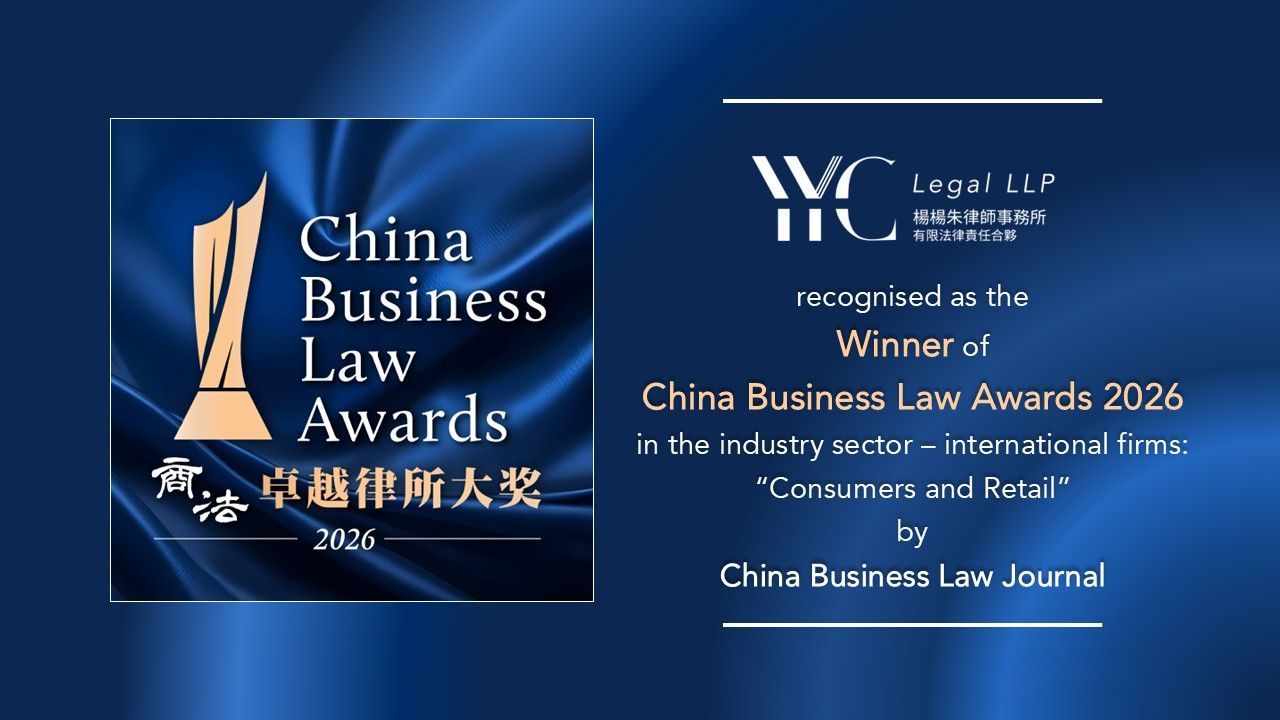
YYC Legal LLP is awarded in the “China Business Law Awards 2026” – international firms – as the Winner in the industry sector category of “Consumer and Retail”.
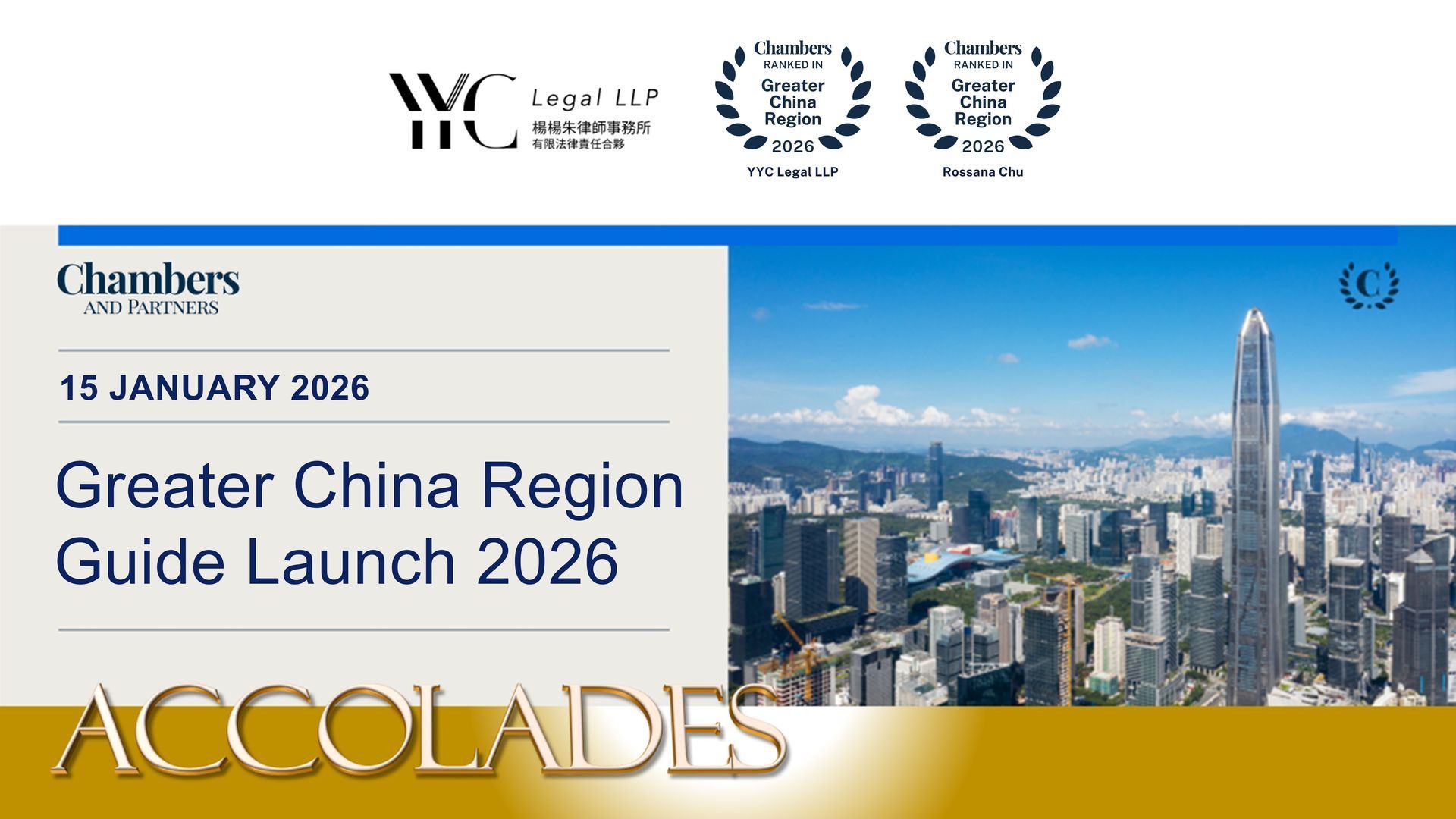
We are pleased to announce that YYC Legal and Partner Rossana Chu are ranked in Chambers Greater China Region Guide 2026
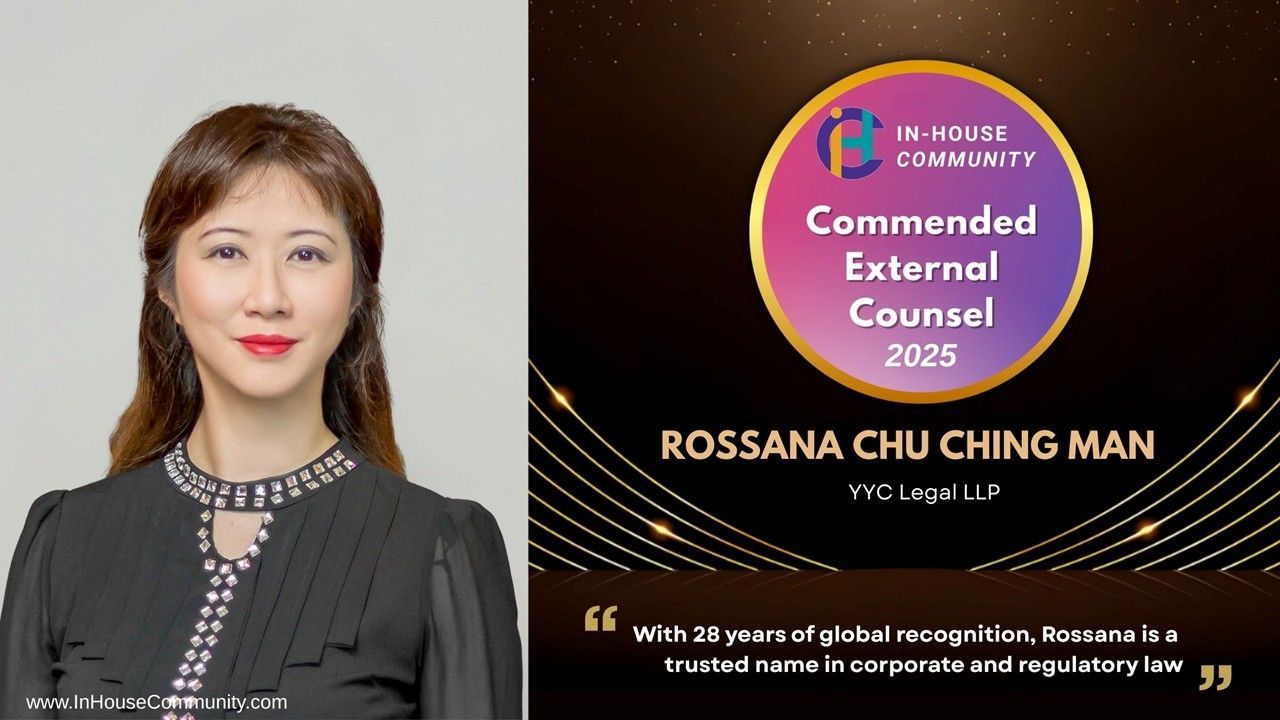
Rossana Chu is recognised as a Commended External Counsel in the In-House Community’s Counsel of the Year Awards 2025
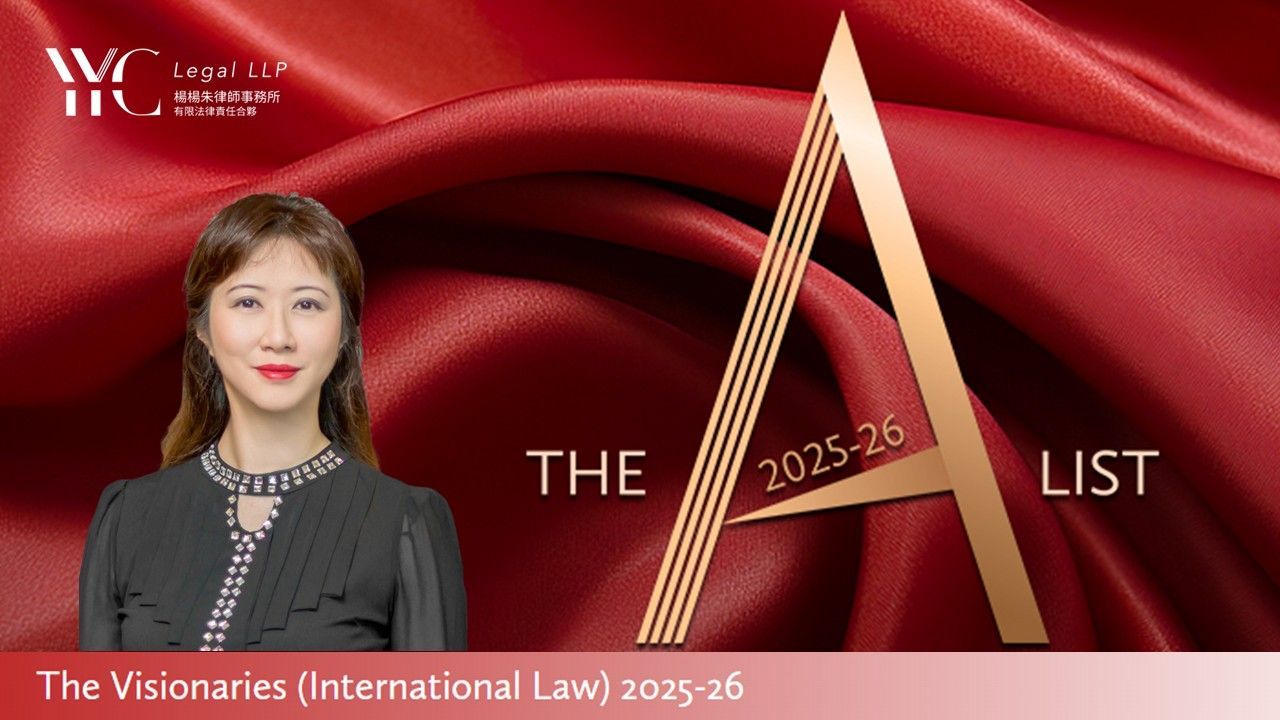
One of our Partners, Rossana Chu, is ranked by China Business Law Journal as one of The Visionaries (International) for 2025-26.
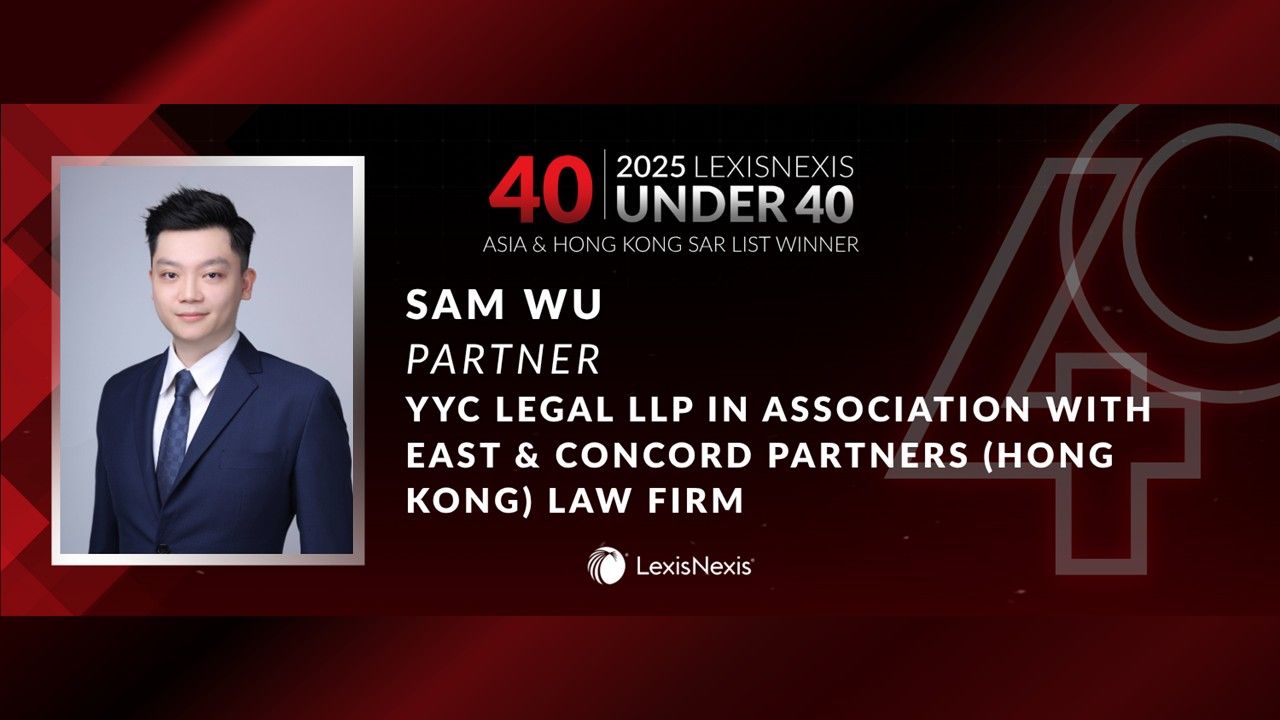
We are pleased to announce that our Partner, Sam Wu, has been selected as a winner in both the LexisNexis® 40 UNDER 40 2025 – Asia List and the Hong Kong SAR List.
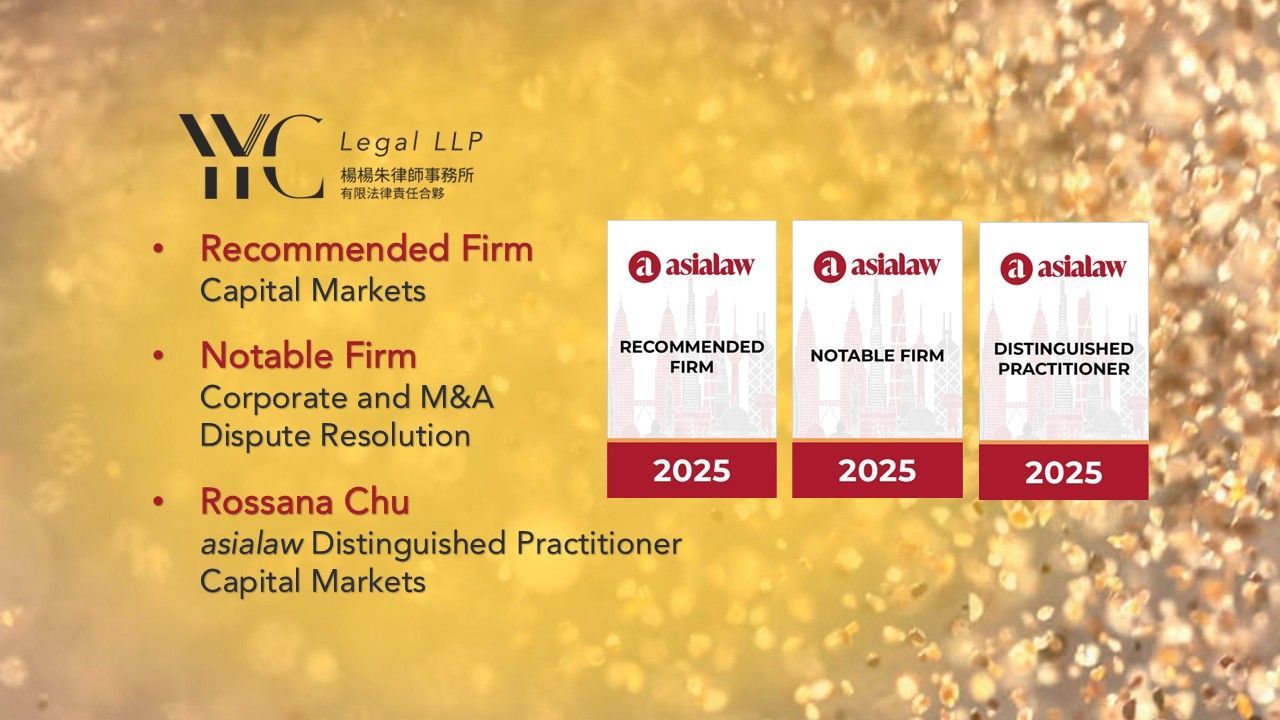
We are delighted to announce that YYC Legal LLP (YYC Legal) and our lawyer have been recommended by asialaw as one of the top-performing legal firms and lawyers in Asia.
Related Article