

Following years of preparation, Hong Kong regulators will implement the Uncertificated Securities Market (USM) in 2026, with the objective of enhancing market efficiency, strengthening competitiveness, and modernising the securities market infrastructure in Hong Kong.
Implementation of the Uncertificated Securities Market in Hong Kong
Rossana Chu • 22 May 2026
Implementation of the Uncertificated Securities Market in Hong Kong

Background
At present, investors may hold securities of Hong Kong–listed companies either in their own names or through intermediaries such as brokerage firms and banks via the Central Clearing and Settlement System (CCASS). Shares are held in the name of Hong Kong Securities Clearing Company Nominees Limited (HKSCC Nominees) under the second arrangement, while under the first arrangement, physical share certificates are issued to investors, who thereby hold both legal title and beneficial ownership of the shares and can directly exercise shareholder rights, including voting and entitlement to distributions. However, should they wish to sell their shares in the open market through CCASS, they must first deposit the certificates with an intermediary and such paper-based process takes approximately 10 business days.
The USM regime and its benefits
The USM regime is designed to enable investors to hold shares in their own names electronically through platforms operated by approved securities registrars (ASRs), thereby eliminating the need for paper certificates. This is why the regime is referred to as “uncertificated”. Investors may also access their portfolios and conduct transactions more easily, conveniently and efficiently.
The USM regime also enables direct communication between listed companies and their investors holding uncertificated shares, without the need to channel through intermediaries. Such direct engagement may enhance shareholder transparency, strengthen corporate governance, and minimise the need for manual intervention.
The USM framework will accelerate securities transfers, thereby improving trading and clearing efficiency. It may also reduce costs and contribute to a greener and paperless market, aligning Hong Kong with prevailing international ESG practices.
Scope of the USM regime
The USM regime will only apply to prescribed securities, which cover Hong Kong listed shares, depositary receipts, stapled securities, interests in collective investment schemes authorised by the Securities and Future Commission (SFC) (e.g. listed real estate investment trusts) but excluding exchange-traded funds that are not withdrawable from CCASS, subscription warrants and rights under a rights issue (if they do not fall under specified class of securities).
Existing shares in a body corporate incorporated in Bermuda, Cayman Islands, Hong Kong or Chinese Mainland, and other existing prescribed securities constituted under the laws of Bermuda, Cayman Islands, Hong Kong or Chinese Mainland, must become USM participating securities (the “participating securities”) within five years from implementation of USM.
For companies incorporated in those jurisdictions and newly listed on the Hong Kong Stock Exchange (HKEX), their shares must be issued electronically (i.e. without paper certificates) from the listing date, unless specifically exempted by the SFC.
What Hong Kong listed companies of prescribed securities should note
The new listing rules related to the USM regime will apply to all listed issuers and listing applicants of prescribed shares as follows:
- They must appoint an ASR which is approved by the SFC to provide securities registrar services under the USM, such as to maintain the register of those securities holders, and to provide an electronic system (the “UNSRT system”) for evidencing and transferring legal title to those securities without paper instruments.
- They must amend their constitutional documents (and/or terms of the prescribed securities) within one year of USM implementation date, to allow the issue of the prescribed securities in uncertificated form and transfers of prescribed securities through authenticated messages, rather than physical instruments of transfer.
- Hong Kong Securities Clearing Company Limited, the relevant ASR and the HKEX will notify each listed company of its transition date to the USM (the “specified date”). The listed company must announce the specified date within one business day of receiving such notice.
- Upon finalising its transition plan, the company must announce the date on which its prescribed securities will become participating securities (such participation date must not be later than the specified date or five years from the USM implementation date, whichever is earlier) and details of its transition plan.
- Where there is any material change to its transition plan, the company must make an update announcement as soon as reasonably practicable.
- No later than 21 business days prior to the participation date, the company must also issue a reminder regarding the participation date, the transition process and a summary of impact of those prescribed securities becoming participating securities.
From the participation date onwards, listed companies may issue new prescribed securities only in uncertificated form (including shares issued under rights issues or scrip dividends) and must not issue title instruments in respect of existing prescribed securities.
What investors should note
Investors are not required to convert their prescribed securities from certificated form to uncertificated form. The existing share certificates will remain valid even after the USM regime becomes effective.
Under the USM regime, investors will be able to hold and manage uncertificated securities in their own names through the USI facility on the UNSRT system operated by the listed company’s ASR. The USI facility is specifically designed for investors to directly manage their prescribed securities in uncertificated form.
When investors wish to sell their shares in the open market via CCASS, they will still need to transfer their shares to HKSCC Nominees. However, under the USM framework, such transfers will be executed electronically via the USI facility in the UNSRT system and can be completed on the same day upon receipt of the investors’ instructions and information. This represents a substantial improvement in efficiency for investors who prefer to hold shares in their own names while enjoying the flexibility to dispose of them promptly in the open market.
YYC Legal LLP is in Association with East & Concord Partners (Hong Kong) Law Firm.
First published in March 2026 YYC Legal - legal trends of China Business Law Journal.
This material has been prepared for general informational purposes only and is not intended to be relied upon as professional advice. Please contact us for specific advice.
Recent articles

The Northern Metropolis has been incorporated into China's 15th Five-Year Plan, reinforcing Hong Kong’s integration into the nation’s overall development strategy.

HKEX consistently emphasises importance of listed issuers complying with its listing rules. This article discusses several enforcement cases published by HKEX.

This article provides commentary on the consultation launched by HKEX in March 2026 to solicit market feedback on its proposed reforms aimed at listing framework.

The HKSAR government reiterated that it will continue to regulate artificial intelligence mainly through existing regimes and concentrates on governance frameworks, guidelines and supervisory tools that guide institutions in deploying AI responsibly within the existing legal architecture.

With heightened cryptocurrency trading and flow, related disputes are emerging with lightning speed, and Courts in HK are well equipped to deal with these disputes.

The HKEX launched a public consultation to seek market feedback on its proposed reforms to enhance its listing framework.
Recent News
YYC Legal LLP is awarded in the “China Business Law Awards 2026” – international firms – as the Winner in the industry sector category of “Consumer and Retail”.
We are pleased to announce that YYC Legal and Partner Rossana Chu are ranked in Chambers Greater China Region Guide 2026
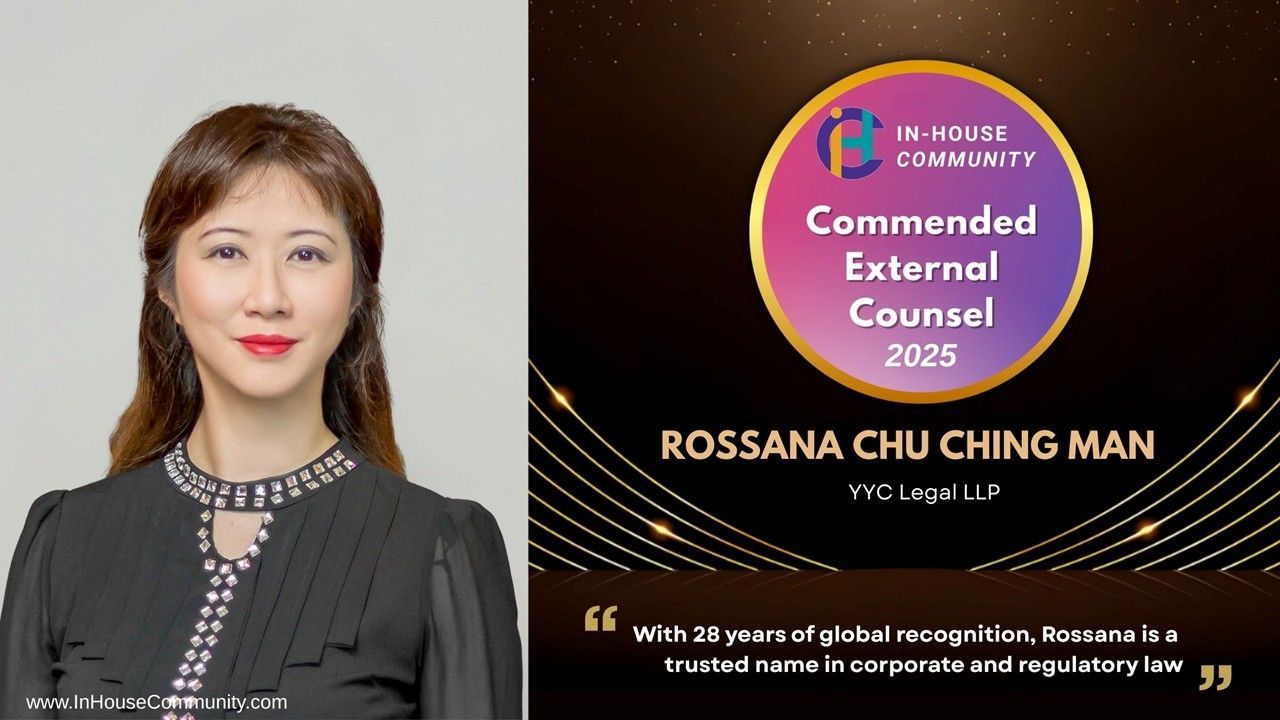
Rossana Chu is recognised as a Commended External Counsel in the In-House Community’s Counsel of the Year Awards 2025
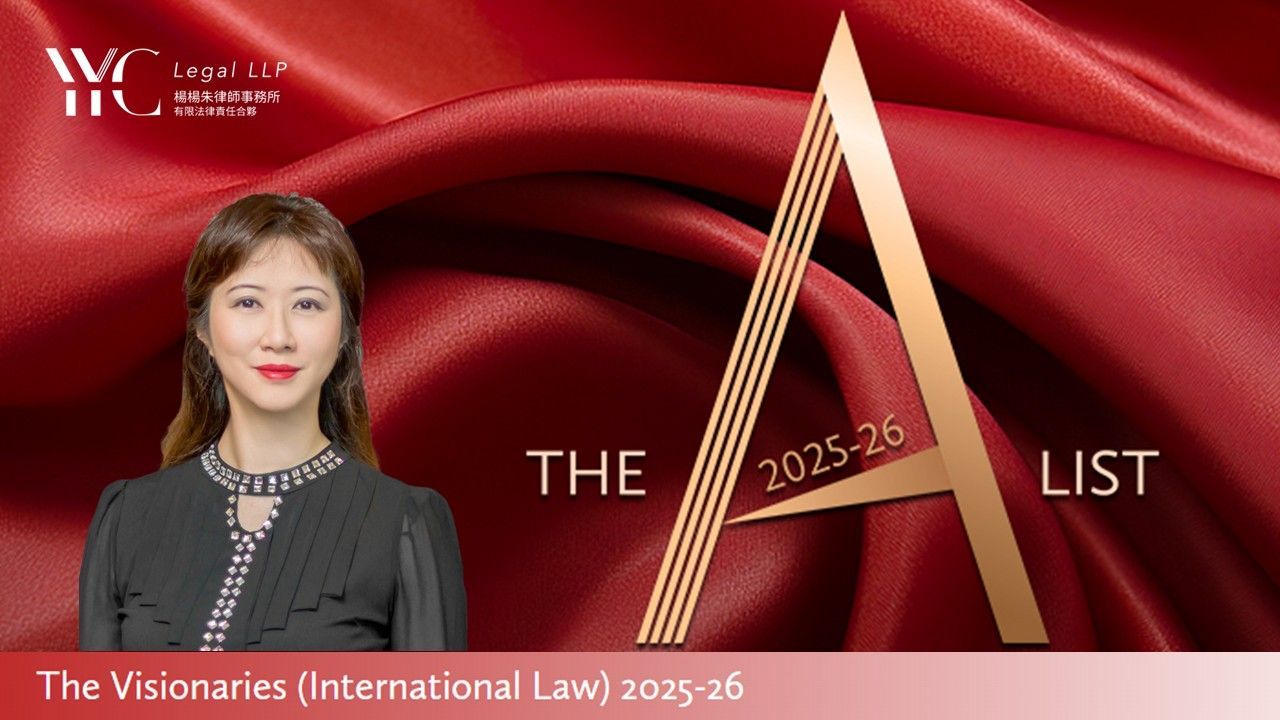
One of our Partners, Rossana Chu, is ranked by China Business Law Journal as one of The Visionaries (International) for 2025-26.
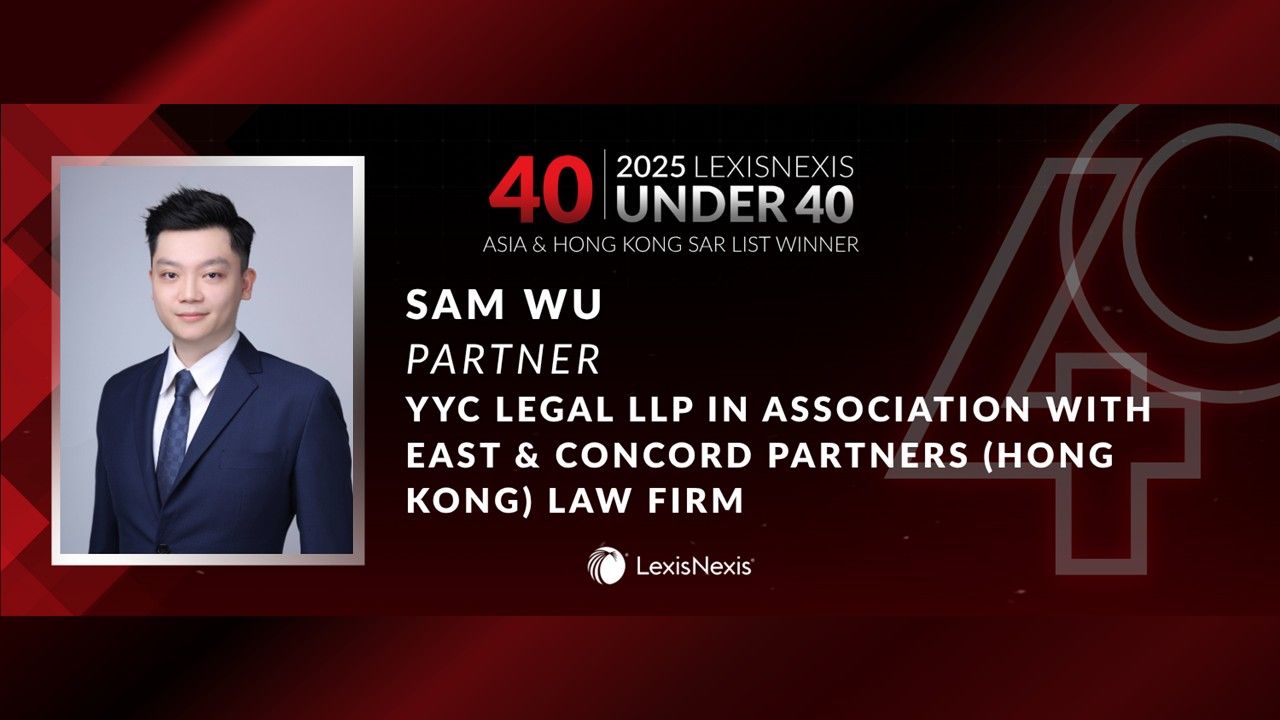
We are pleased to announce that our Partner, Sam Wu, has been selected as a winner in both the LexisNexis® 40 UNDER 40 2025 – Asia List and the Hong Kong SAR List.
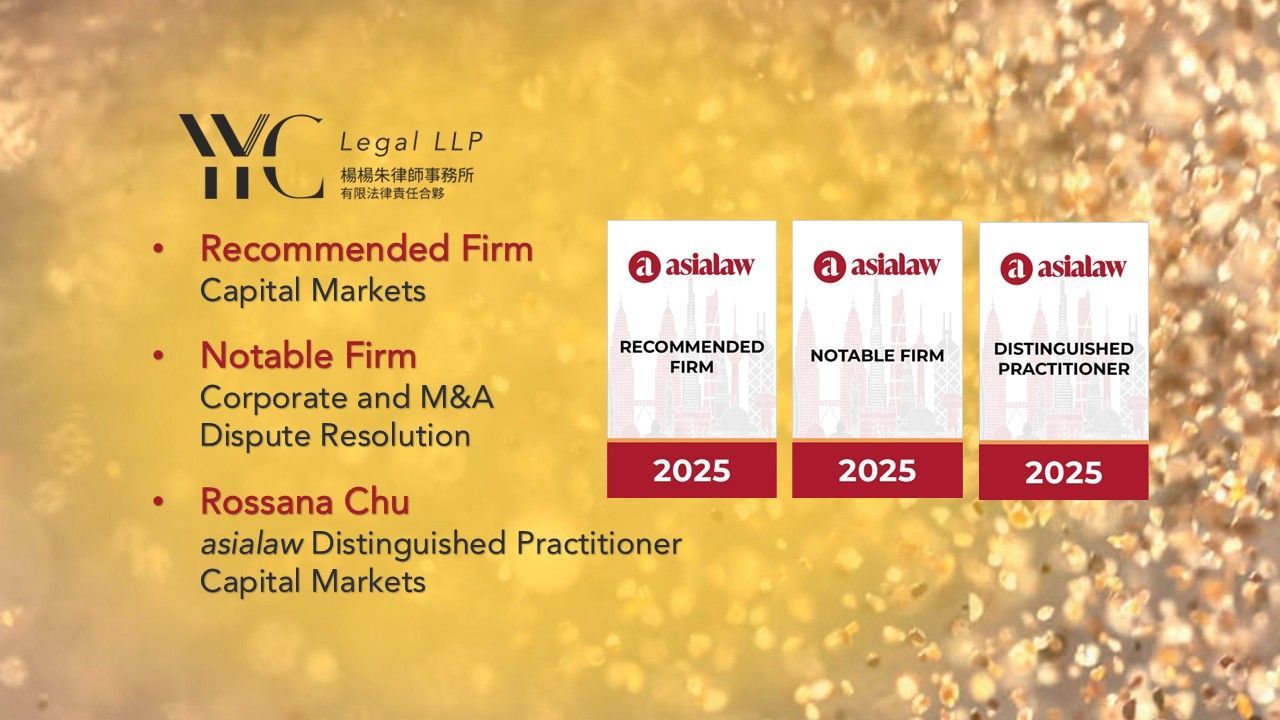
We are delighted to announce that YYC Legal LLP (YYC Legal) and our lawyer have been recommended by asialaw as one of the top-performing legal firms and lawyers in Asia.