




The Northern Metropolis has been incorporated into China's 15th Five-Year Plan, reinforcing Hong Kong’s integration into the nation’s overall development strategy. The initiative embodies the vision to establish a high-value industrial chain model of “Hong Kong research and development (R&D), Greater Bay Area (GBA) commercialisation, and global market distribution.” It is also envisaged as a strategic hub facilitating the seamless flow of people, goods, capital, and data across the region.
Hong Kong’s Northern Metropolis and the 15th Five-Year Plan
Rossana Chu • 25 September 2026
Hong Kong’s Northern Metropolis and the 15th Five-Year Plan

Key features
The Northern Metropolis covers approximately 300 square kilometres (30,000 hectares), accounting for around one-third of Hong Kong’s total land area. Upon full development, it is expected to accommodate a population of approximately 2.5 million people.
The Northern Metropolis is structured around four zones, namely, (1) innovation and technology zone, (2) high-end professional services and logistics hub, (3) boundary commerce and industry zone, and (4) blue and green recreation, tourism and conservation circle.
Enterprises establishing operations in the Northern Metropolis may enjoy Hong Kong’s traditional strengths, including its international financial centre status, its common law system which is widely recognised by the international business community, and its pool of globally experienced professional talent. In addition, the Hong Kong government will offer comprehensive packages to provide incentives for eligible businesses.
Legal issues on setup
With respect to site acquisition and development, the Hong Kong government has introduced a streamlined approval process aimed at significantly reducing the time required for land-use and planning approvals, potentially shortening the process from approximately nine months to two months. Nevertheless, developments within the Northern Metropolis remain subject to applicable planning, land administration, and zoning controls, and businesses must ensure that their proposed operations comply with the planning objectives and permitted uses of the relevant zone.
In addition, existing environmental legislation, including the Environmental Impact Assessment Ordinance, continues to apply to projects within the Northern Metropolis. Key legal considerations therefore include the land acquisition and lease terms, development and building approvals, environmental and regulatory compliance, and future Northern Metropolis-specific regulations.
From a corporate and strategic planning perspective, businesses should carefully consider the optimal structure and functions of their Northern Metropolis operations. Companies may have to evaluate strategies for future capital raising and investments, potential IPO opportunities, and mechanisms to facilitate the efficient movement of capital into and out of Hong Kong.
Other important issues may include the availability of government incentives, subsidies, and preferential policy measures, as well as establishing appropriate frameworks for managing and resolving disputes that may arise with government authorities, business partners, employees, customers or other stakeholders.
Tax planning plays an essential role at both the establishment and the ongoing operation stages. Enterprises will consider cross-border tax planning, eligibility for tax incentives and deductions, transfer pricing arrangements, structuring of cross-border service and commercial transactions, and the potential implications of withholding taxes.
For enterprises seeking to establish R&D operations, Hong Kong offers a range of attractive tax incentives designed to promote innovation and technology development across the city. These incentives are available territory-wide and are not limited to projects located within the Northern Metropolis.
In particular, the Patent Box regime provides a concessionary tax rate of 5% on qualifying profits derived from eligible intellectual property (IP), enhancing the attractiveness of Hong Kong as a location for IP development and commercialisation. The enhanced R&D tax deduction regime allows businesses to claim a 300% tax deduction on the first HKD2 million (USD255,000) of qualifying R&D expenditure incurred in Hong Kong and a 200% deduction on qualifying R&D expenditure exceeding that amount.
Businesses with substantial IP focus should obtain legal and tax advice on key considerations such as group IP ownership and licensing arrangements, protection of IP and trade secrets, employee invention and confidentiality agreements, collaborations with universities and other institutions and the structuring of cross-border IP licensing, commercialisation and enforcement strategies.
Companies routinely collect, process and store significant volumes of data in Hong Kong should comply with Hong Kong’s Personal Data (Privacy) Ordinance. Further, cross-border data transfer is probably a hot topic for technology companies. The movement of personal data between Hong Kong and the Chinese mainland is increasingly facilitated by the Greater Bay Area Standard Contract, which provides a framework for the secure and orderly transfer of personal information within the GBA. However, where an enterprise processes or accesses data originating from the mainland, it must also consider the application of the PRC laws and regulations relating to cybersecurity, data protection, and cross-border data transfers.
Other key considerations include the establishment of robust cybersecurity governance frameworks, incident and data breach response procedures, AI-related data governance and compliance, and the lawful handling of information relating to customers, suppliers, employees, research collaborators, and other stakeholders.
Businesses should carefully consider a range of employment-related matters, including the terms of employment contracts, scope and implementation of non-compete and confidentiality provisions, compliance with Hong Kong’s Employment Ordinance, and the design of competitive remuneration packages, employee benefits, and equity incentive or stock option schemes. Employers must also ensure compliance with applicable occupational health and safety requirements and workplace regulations.
Where specialist or expertise talent is to be sourced from outside Hong Kong, companies will have to address immigration and work visa requirements for overseas and mainland talent. Hong Kong offers a number of talent admission programmes, including the Quality Migrant Admission Scheme, the Admission Scheme for Mainland Talents and Professionals and the Top Talent Pass Scheme. These initiatives provide flexible pathways for talent mobility and help enterprises access the expertise to their growth and long-term development.
Comprehensive legal planning at an early stage can help businesses maximise the opportunities presented by the Northern Metropolis while effectively managing legal and regulatory risks.
YYC Legal LLP is
in Association with East & Concord Partners (Hong Kong) Law Firm.
First published in Jul/Aug 2026 YYC Legal - legal trends of China Business Law Journal.
This material has been prepared for general informational purposes only and is not intended to be relied upon as professional advice. Please contact us for specific advice.
Recent articles

HKEX consistently emphasises importance of listed issuers complying with its listing rules. This article discusses several enforcement cases published by HKEX.

This article provides commentary on the consultation launched by HKEX in March 2026 to solicit market feedback on its proposed reforms aimed at listing framework.

The HKSAR government reiterated that it will continue to regulate artificial intelligence mainly through existing regimes and concentrates on governance frameworks, guidelines and supervisory tools that guide institutions in deploying AI responsibly within the existing legal architecture.

With heightened cryptocurrency trading and flow, related disputes are emerging with lightning speed, and Courts in HK are well equipped to deal with these disputes.

HK regulators will implement USM in 2026, enhancing market efficiency, strengthening competitiveness, and modernising the securities market infrastructure in HK.

The HKEX launched a public consultation to seek market feedback on its proposed reforms to enhance its listing framework.
Recent News

YYC Legal LLP is awarded in the “China Business Law Awards 2026” – international firms – as the Winner in the industry sector category of “Consumer and Retail”.
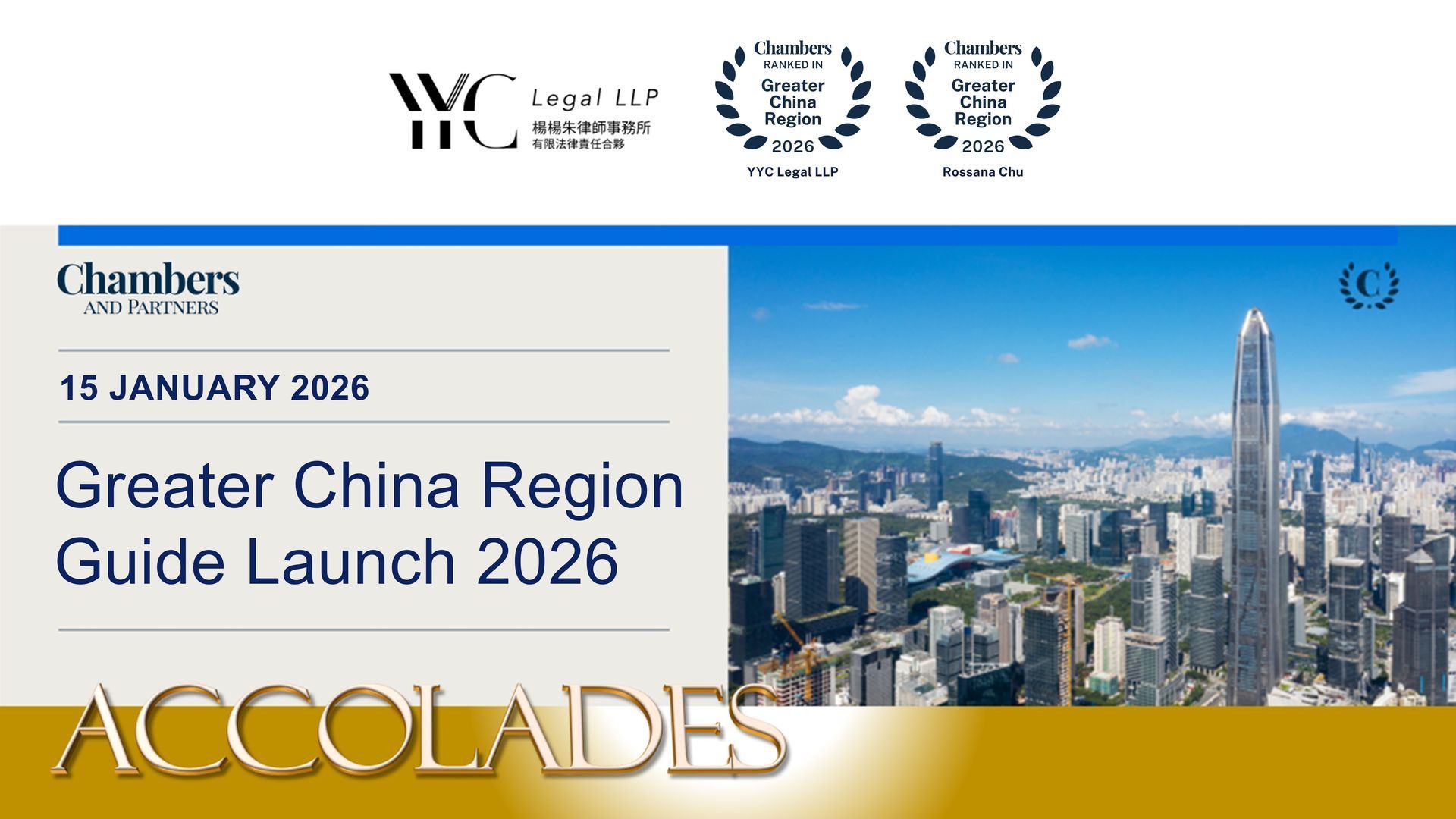
We are pleased to announce that YYC Legal and Partner Rossana Chu are ranked in Chambers Greater China Region Guide 2026

Rossana Chu is recognised as a Commended External Counsel in the In-House Community’s Counsel of the Year Awards 2025
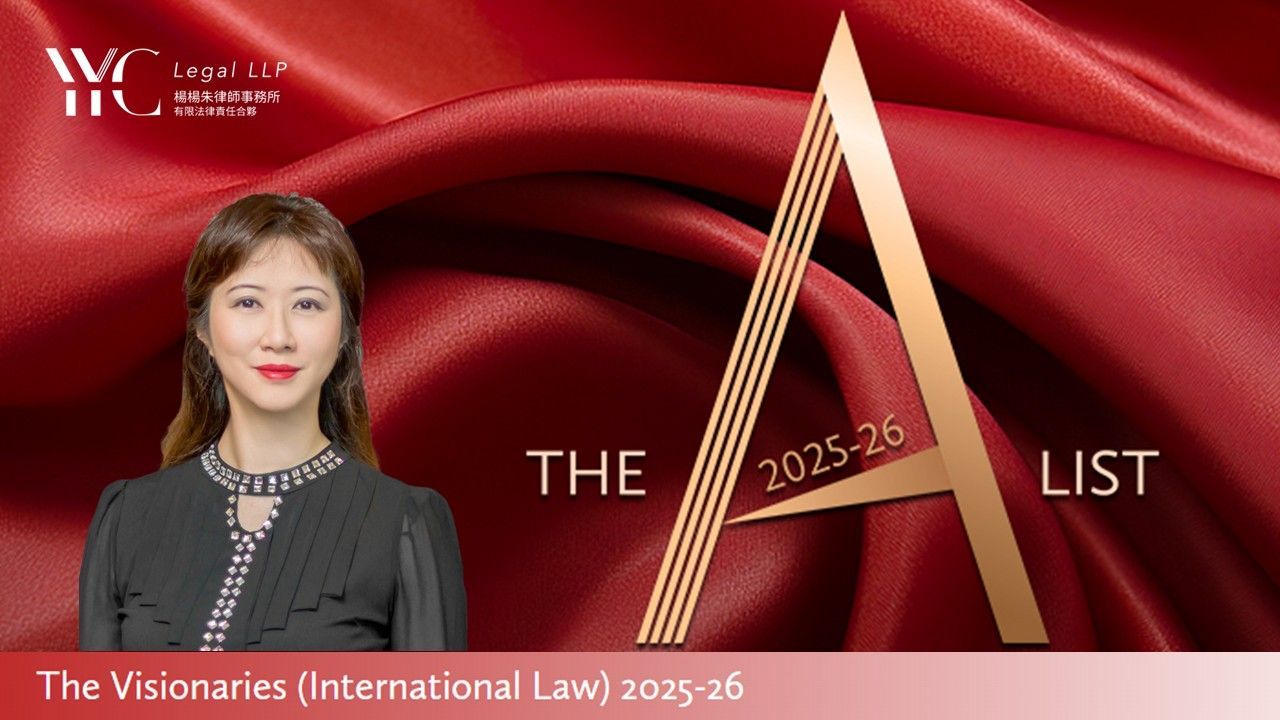
One of our Partners, Rossana Chu, is ranked by China Business Law Journal as one of The Visionaries (International) for 2025-26.
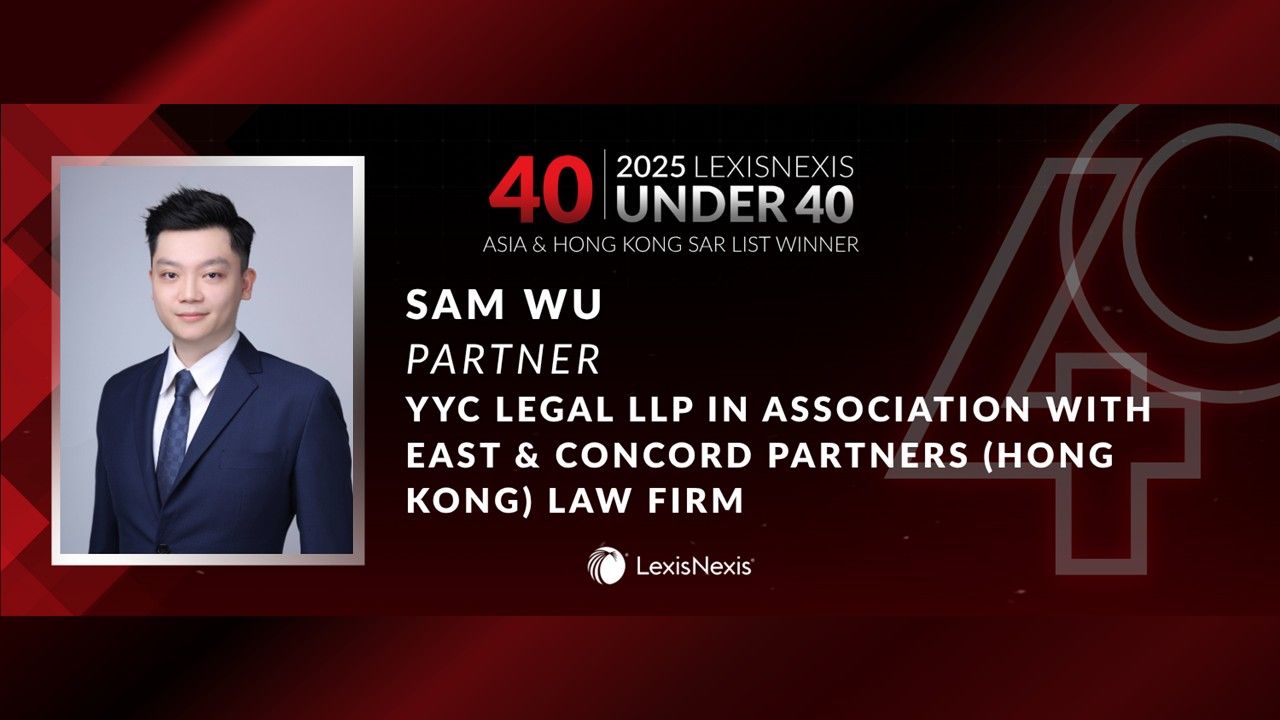
We are pleased to announce that our Partner, Sam Wu, has been selected as a winner in both the LexisNexis® 40 UNDER 40 2025 – Asia List and the Hong Kong SAR List.

We are delighted to announce that YYC Legal LLP (YYC Legal) and our lawyer have been recommended by asialaw as one of the top-performing legal firms and lawyers in Asia.